
Detachable Container House
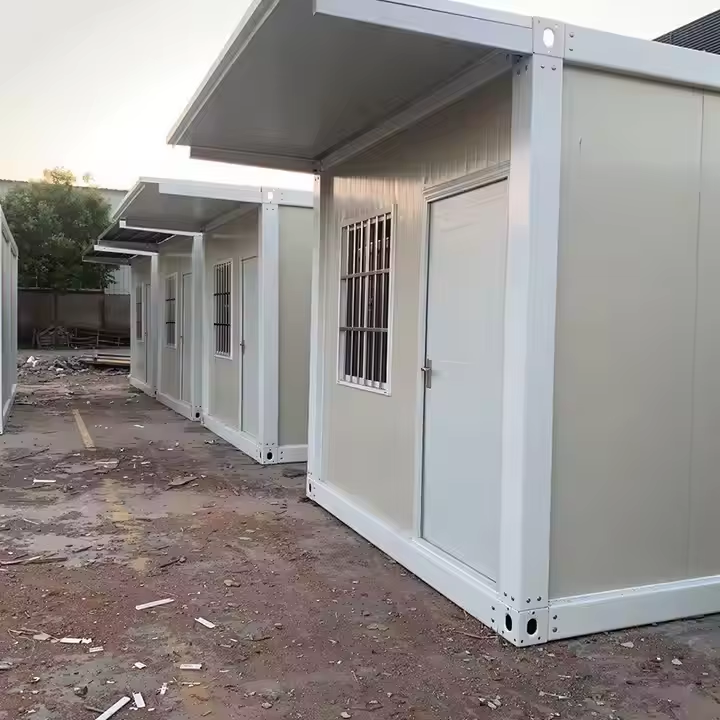
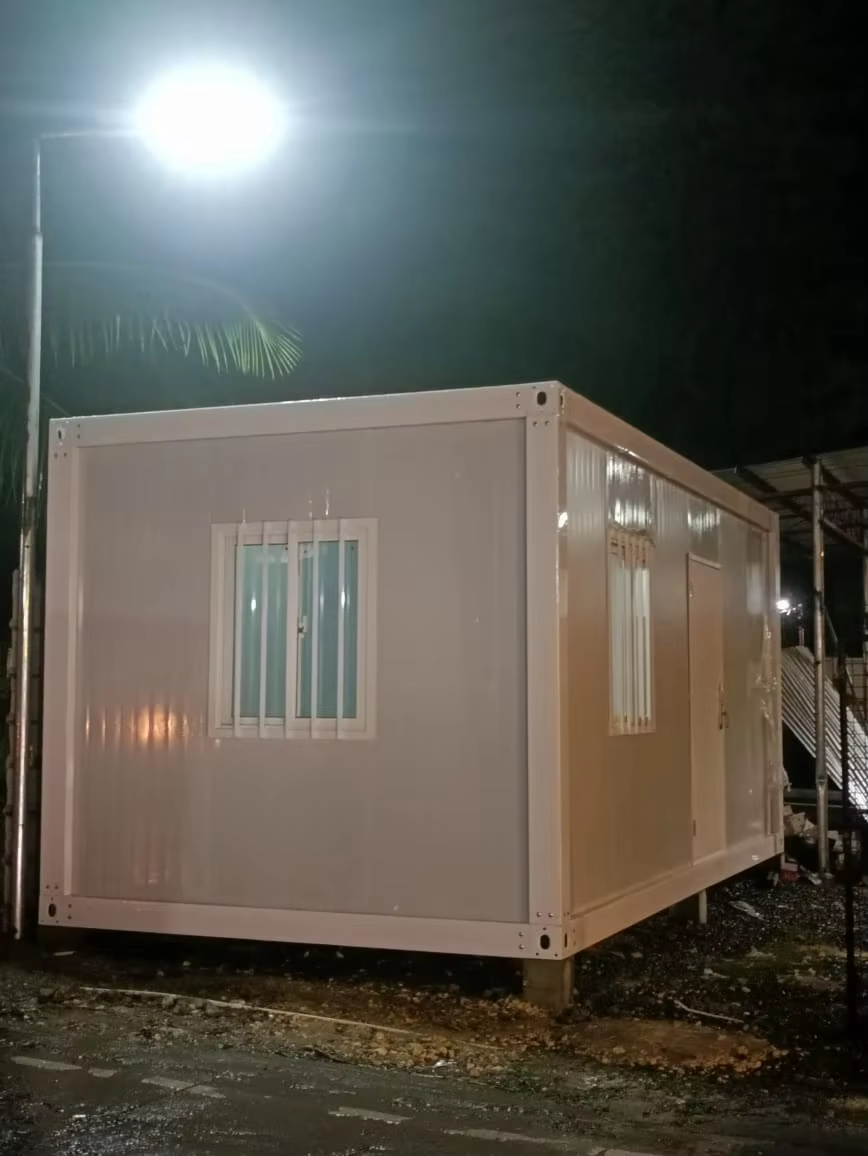
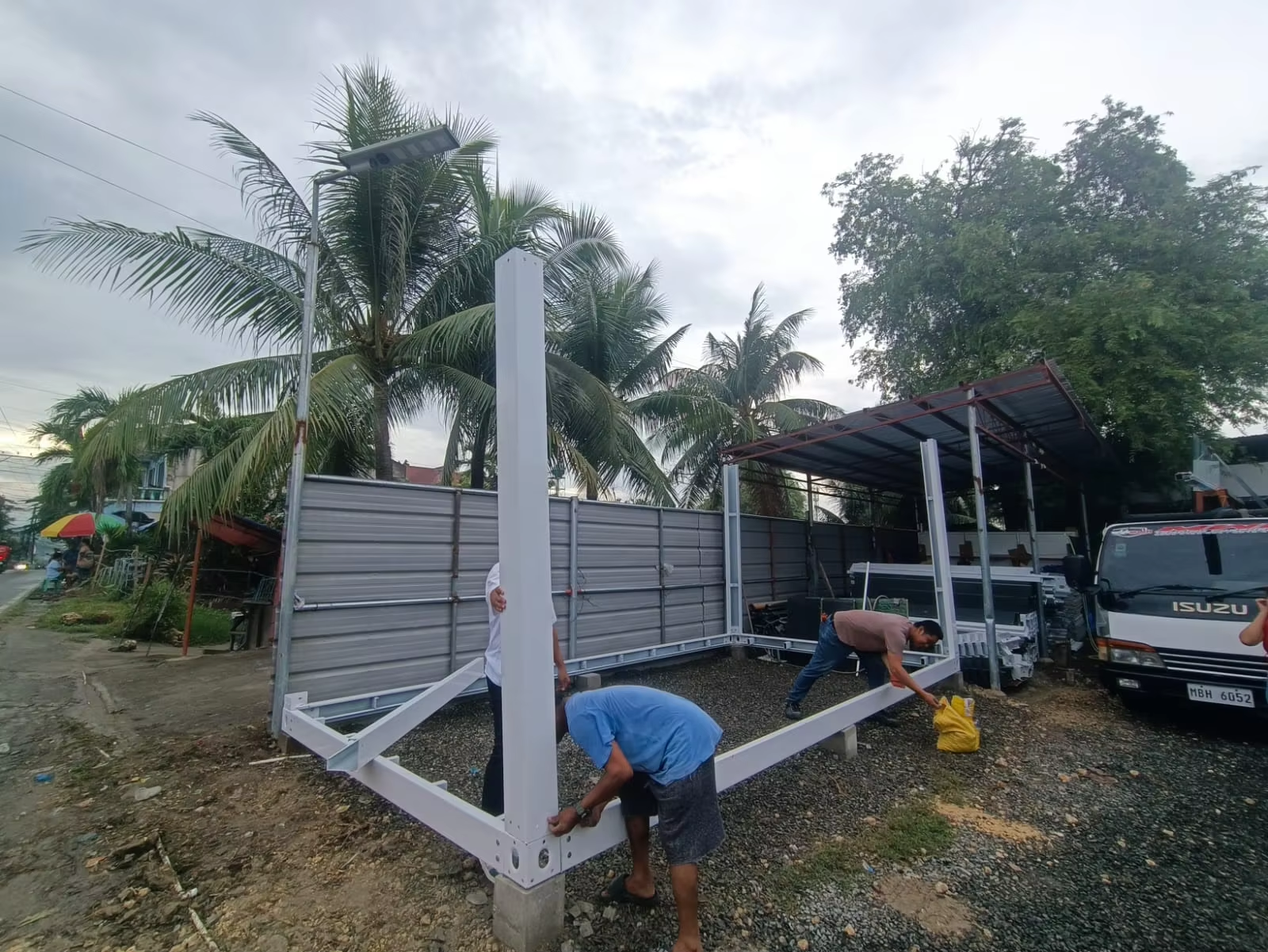
Detachable Container House is a flexible, reusable modular housing solution—designed for easy disassembly, transportation, and reassembly. Crafted with high-strength steel frames and eco-friendly panels, it supports quick setup (2-3 people finish in 2 days), resists Grade 11 winds & Grade 6 earthquakes, and fits scenarios like temporary residences, commercial pop-ups, or emergency shelters. Its detachable design cuts transport costs by 40% vs. fixed containers, ideal for dynamic usage needs.
Detachable Container House
Fat Pack Detachable Container House: Your Go-Anywhere, Setup-Anywhere Modular Solution
Introducing the future of flexible living and working spaces: the Fat Pack Detachable Container House. Engineered for those who value mobility, efficiency, and durability, our innovative design allows the entire structure to be easily assembled, taken apart, and reassembled on a new site multiple times without structural compromise. This isn’t just a building; it’s a sustainable, long-term asset that adapts to your life’s journey.
Core Features & Advantages:
-
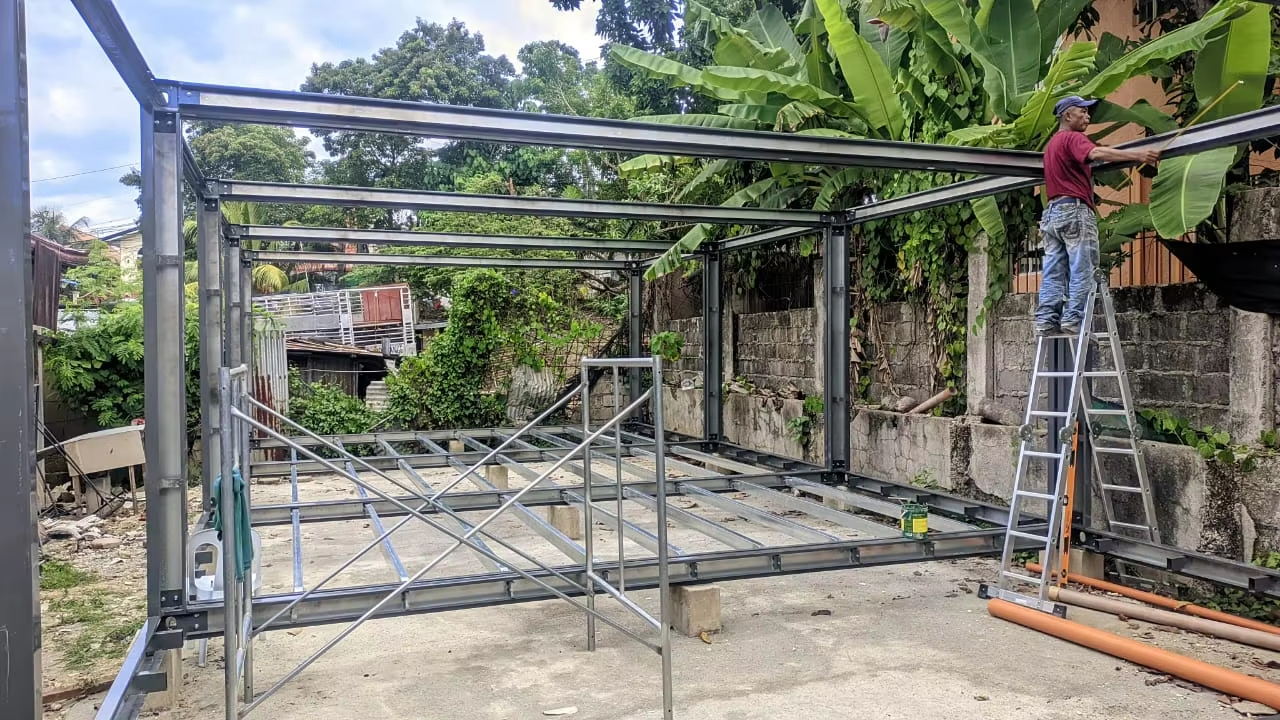
Revolutionary Detachable Design: Our unique bolt-together frame and panel system allows for quick and tool-minimized assembly and disassembly. significantly reducing labor costs and future relocation expenses.
-
Unmatched Relocatability: Move your entire home or office with ease. Perfect for frequent relocations, temporary land use, or projects where permanence is not an option.
-
Eco-Conscious & Sustainable: By enabling reuse across multiple locations, we drastically reduce construction waste. Made from recyclable materials and designed for a long lifecycle, it’s a choice for the environmentally responsible.
-
Built to Last: Constructed from high-grade, weathering steel and fortified with advanced anti-corrosion treatments, each unit is built to withstand the rigors of multiple moves and diverse climates.
-
Full Customization: Despite its modular nature, enjoy complete freedom. Choose your layout, interior finishes, window placements, and integrate smart home technologies or off-grid capabilities like solar panels and water recycling systems.
Technical Specifications :
-
Structure: Premium Corten Steel (or Galvanized Steel)
-
Connection System: High-Strength Bolted Frame
-
Insulation: High-Efficiency PIR/PUR Panels (Fire-Retardant)
-
Relocation Cycles: Designed for 5+ full disassembly/relocation cycles
-
Compliance: Meets International Building Code (IBC) standards for modular structures
Table of Contents
Application
- Temporary Transitional Housing: Ideal for urban 拆迁 (demolition) families or rural self-builders—assemble quickly for short-term living, then disassemble and store until needed, or relocate to a new plot.
- Glamping & Vacation Cabins: Resorts or campgrounds can deploy multiple units to create a modular cabin cluster; after the tourist season, disassemble and store to save space, or relocate to a different scenic spot.
- Worker Dorms: For remote projects (e.g., mining, road construction)—assemble on-site for employee accommodation, then disassemble and transport to the next project site, cutting long-term rental costs.
- Pop-Up Stores & Food Kiosks: Retailers or F&B brands can set up temporary stores in shopping malls, festivals, or street markets; after the event, disassemble easily without leaving construction residues, and reuse for future events.
- Temporary Offices & Showrooms: Businesses expanding to new regions can assemble a quick office or product showroom; if the location needs adjustment, relocate the disassembled unit to a better spot (e.g., from a suburban industrial park to a downtown area).
- Outdoor Service Stations: Parks, beaches, or scenic areas can use it as a ticket booth, souvenir shop, or first-aid station—lightweight disassembly allows seasonal deployment (e.g., set up in summer, store in winter).
- On-Site Construction Offices: Construction companies can place the house near job sites for project management teams; after the project ends, disassemble and move to the next construction site, avoiding the cost of building new temporary offices.
- Temporary Warehouses: Factories or logistics centers can use it to store seasonal materials (e.g., agricultural products, holiday inventory); disassemble and stack when not in use to free up yard space.
- Equipment Shelters: For outdoor industrial equipment (e.g., generators, water pumps)—the detachable house provides weather protection, and can be moved if the equipment is relocated.
- Post-Disaster Shelters: After earthquakes, floods, or hurricanes, the house can be transported as disassembled parts (easy to reach remote disaster areas) and assembled quickly to provide temporary housing for victims; it can also be converted into a medical aid station or food distribution center.
- Epidemic Isolation Units: During public health crises, multiple units can be deployed in 1-2 days as isolation rooms—each with independent ventilation and sanitation facilities; after the epidemic, disassemble and store for future emergencies.
- Wildfire Evacuation Housing: In fire-prone areas, pre-stored disassembled units can be rapidly assembled as temporary shelters for evacuated residents, avoiding delays from building traditional temporary housing.
- Field Workstations: Geological survey teams, forest rangers, or ecological monitors can use it as a living and working base in remote areas—lightweight disassembly allows transportation via small trucks or even helicopters (for mountainous regions).
- Temporary School Classrooms: In areas with insufficient school buildings (e.g., rural areas or post-disaster regions), assemble the house as transitional classrooms; when permanent schools are built, relocate the unit to other communities in need.
- Event Accommodation: For large-scale events (e.g., music festivals, sports tournaments), use multiple units as temporary dormitories for staff or performers; disassemble quickly after the event to restore the venue.
FAQ
1. Do you provide on-site installation service?
We provide very detailed installation instruction drawings and videos for every project.
For large projects, we will have both installation workers and supervisors on site. The fee for the on-site service should be negotiated with clients.
2.What’s your delivery time?
Normally, delivery time is 7-10 days after deposit received. For large order, the delivery time should be negotiated.
3.How to control the quality of your product?
a. quality of the design: think about possible problems in advance and provide a high-quality design solution.
b. quality of the raw material: choose the qualified raw material
c. quality of the production: precise manufacturing technique, experienced workers, strict quality inspection.
4. How to deal with quality problems?
Warranty is 2 years. Within the warranty period, TangLu will responsible for all quality problems caused by our production.
5. If there is a clear service life of your products? If have, how long?
Under conventional climate and environment, the service life of container house steel frame is 20 years.
6. What designs do you have in different climates (How can the products adopt to different climates)?
Strong wind region: improve the wind-resisting ability of the internal structure. Cold region: increase the thickness of the wall, or use good insulation material, improve anti-pressure ability of the structure. High corrosion region: use corrosion resistant material, or paint anti-corrosive coating.
Shipping Container Dimensions
Shipping containers exist in various sizes and configurations, thus serving as a flexible solution for numerous applications—from storage to fully tailored living spaces. When choosing the appropriate container for your project, it’s vital to understand standard shipping container dimensions. This guide supplies detailed information about the external dimensions, internal dimensions, square footage, weight, and door openings of 10-foot, 20-foot, and 40-foot shipping containers. In addition, we’ll cover key specifications such as tare weight and gross weight.
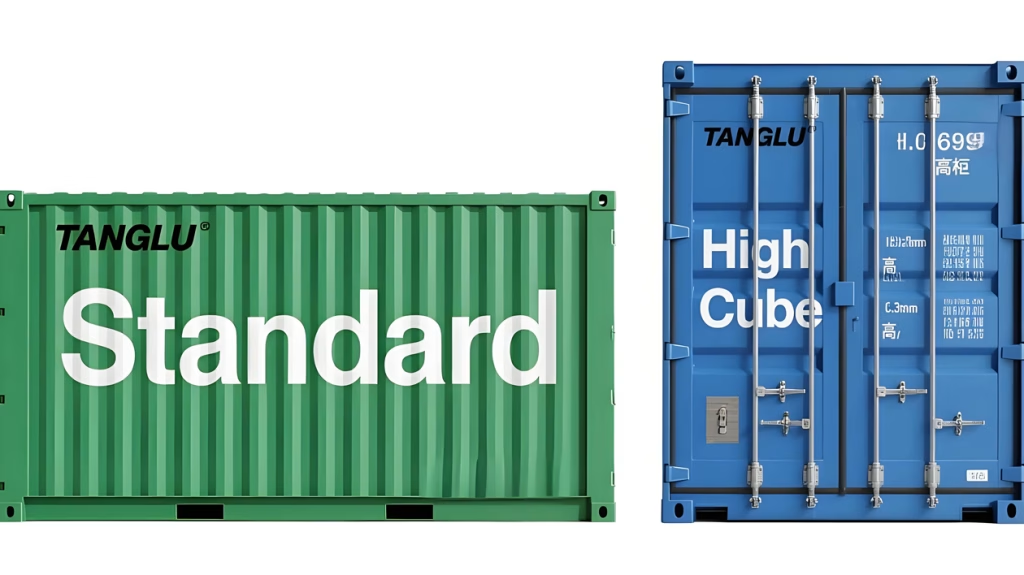
SHIPPING CONTAINER SIZE CHART
Below is a comprehensive table that details the dimensions and specifications for standard sizes of shipping containers:
| Container Size | Exterior Dimensions (L x W x H) | Interior Dimensions (L x W x H) | Square Footage | Cubic Feet | Tare Weight | Gross Weight | Door Openings (W x H) |
|---|---|---|---|---|---|---|---|
| 10 ft | 10′ x 8′ x 8’6″ | 9’3″ x 7’8″ x 7’10” | 75 square feet | 560 cu. ft. | ~2,850 lbs | ~22,000 lbs | 7’8″ x 7’5″ |
| 20 ft | 20′ x 8′ x 8’6″ | 19’4″ x 7’8″ x 7’10” | 150 square feet | 1172 cu. ft. | ~4,850 lbs | ~67,200 lbs | 7’8″ x 7’5″ |
| 40 ft | 40′ x 8′ x 8’6″ | 39’5″ x 7’8″ x 7’10” | 300 square feet | 2350 cu. ft. | ~8,000 lbs | ~67,200 lbs | 7’8″ x 7’5″ |
| 40 ft High Cube | 40′ x 8′ x 9’6″ | 39’5″ x 7’8″ x 8’10” | 300 square feet | 2694 cu. ft. | ~8,600 lbs | ~67,200 lbs | 7’8″ x 8’5″ |