
Fat Pack Container House
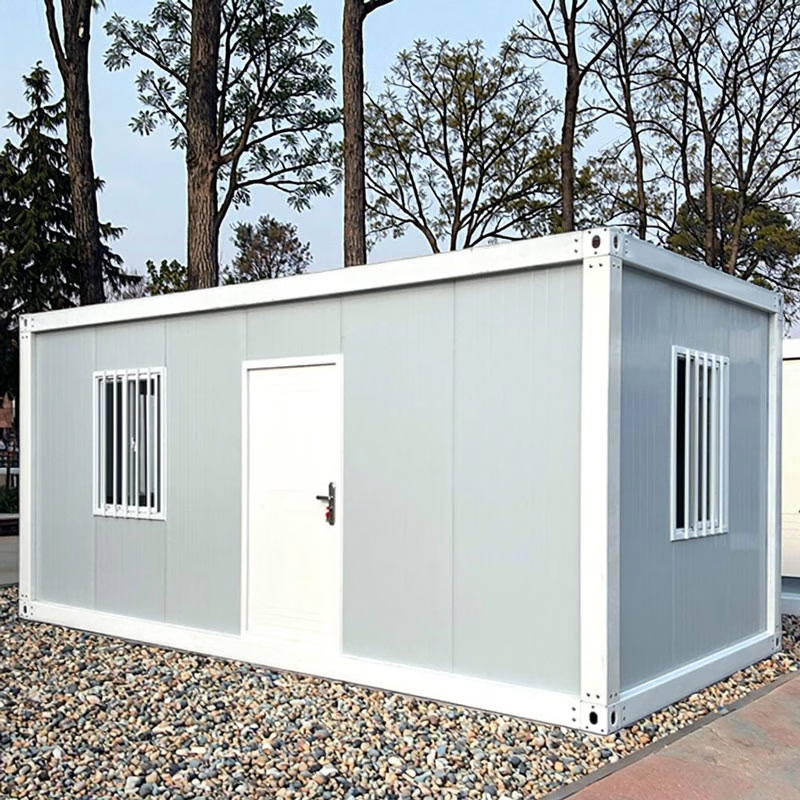
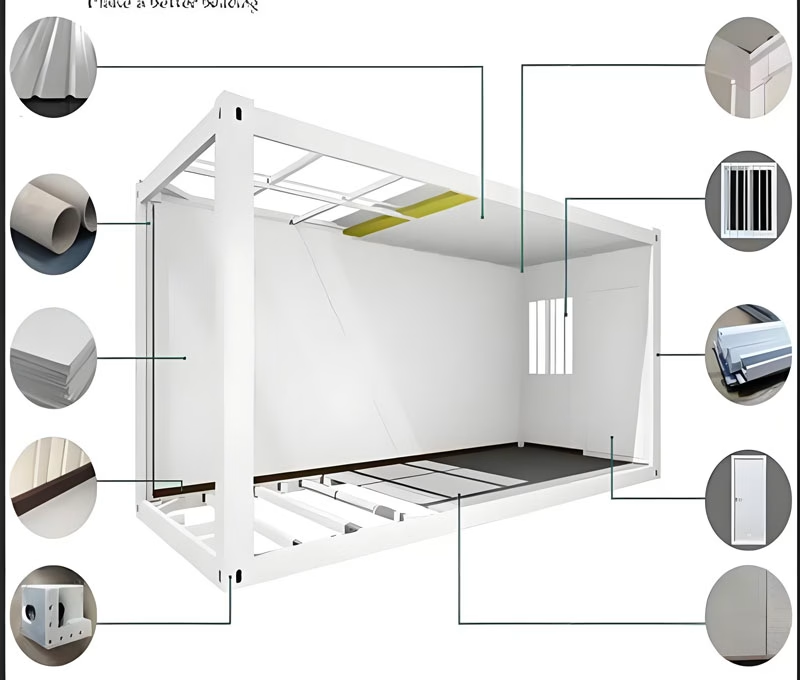
The Fat Pack Container House is a high-efficiency modular container housing solution, crafted from high-strength steel and eco-friendly panels. It supports quick assembly (completable by 2-4 people within 3 days), boasts wind and earthquake resistance (withstanding wind speeds up to Grade 12 and seismic intensity up to Grade 7), and integrates thermal insulation, waterproofing, and fireproofing performance. Available in flexible custom sizes (20ft/40ft standard or non-standard) and functions, it is suitable for scenarios such as temporary residences, commercial spaces, and emergency shelters, balancing practicality and cost-effectiveness to easily meet diverse living and usage needs.
Fat Pack Container House
Fat Pack Container House: Redefining the Future of Modular Spaces
The Fat Pack Container House incorporates innovative design and high-quality industrial standards to transform shipping containers into fully functional, comfortable, and modern living spaces. Each unit is structurally reinforced and treated with eco-friendly materials, ensuring both strength and sustainability while offering highly customizable architectural solutions.
Key Features:
-
Rapid Deployment: Modular design allows for quick on-site assembly, significantly reducing construction time and labor costs.
-
Eco-Friendly & Energy Efficient: Recyclable containers can be equipped with solar panels, rainwater harvesting systems, and high-performance insulation to minimize environmental impact.
-
Ultimate Flexibility: Supports horizontal and vertical expansion, easily adapting to residential, commercial, office, camp, and emergency shelter applications.
-
Durability: Weather-resistant steel and anti-corrosion coatings ensure long-term stability even in extreme conditions.
-
Smart Customization: Optional smart home features (e.g., air conditioning, lighting, security systems) to meet modern living and working needs.
Technical Specifications (Example):
-
Standard Sizes: 20ft/40ft (customizable)
-
Insulation Grade: B1 Fireproof Material
-
Design Lifespan: 25+ Years
-
Compliance: ISO Standard Structural Safety Certification
Table of Contents
Application
- Temporary Residences: Suitable for transitional housing during urban demolition and temporary dwellings for rural self-built houses. It quickly meets living needs and can be disassembled for recycling or reconstructed elsewhere later;
- Holiday Houses/Homestays: Cultural tourism scenic spots and campsites can customize batches of units to create internet-famous container homestay clusters. The appearance can be tailored to natural, industrial, and other styles to attract tourists;
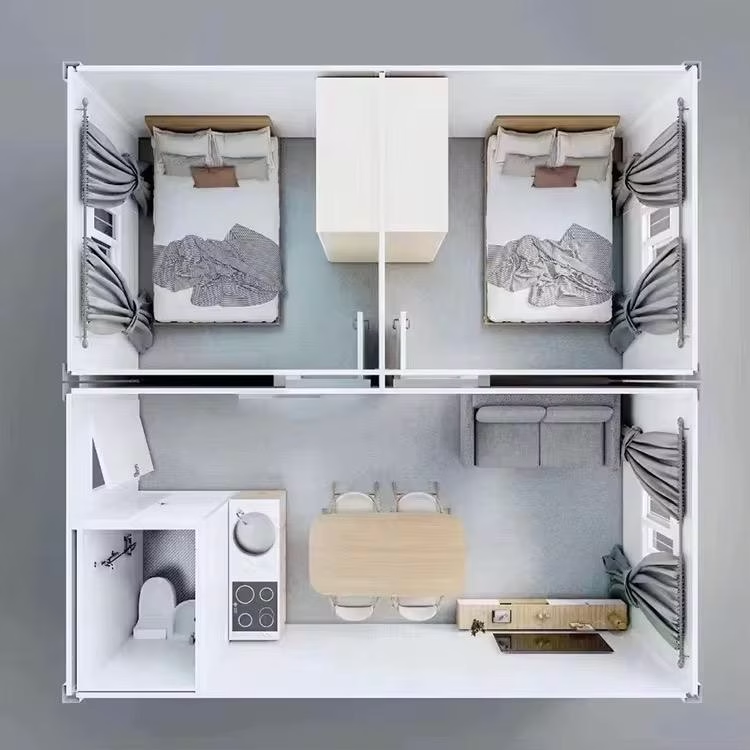
- Employee Dormitories: Provides temporary accommodation for employees in factories, mines, and remote project bases. Equipped with independent bathrooms and air conditioners to ensure living comfort, and can be moved and reused with projects.
- Pop-up Stores: Quickly builds temporary retail spaces in business districts and exhibition venues, flexibly adapting to brand promotion and product display needs. It can be quickly evacuated after the lease period, reducing venue costs;
- Outdoor Cafés/Bars: Creates distinctive leisure spaces in parks, beaches, pedestrian streets, and other scenarios using the portability and high appearance of container houses to attract customers;
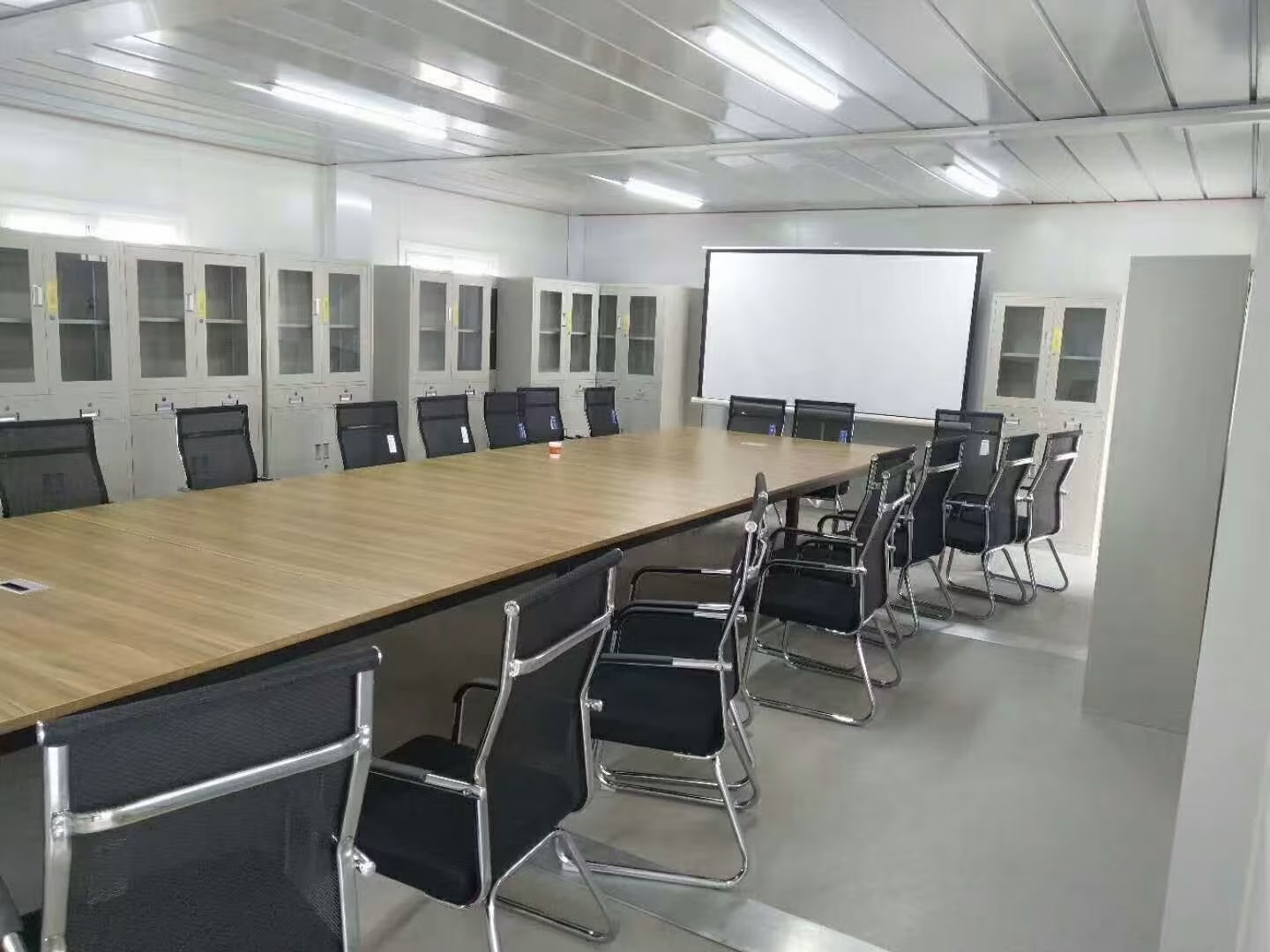
- Temporary Offices: Serves as temporary office spaces for enterprises during off-site projects and exhibition preparation. It can integrate office desks, meeting areas, and pantries to meet the efficient collaboration needs of teams.
- Temporary Construction Site Offices: Provides on-site office spaces for managers and technical teams in construction projects and road construction sites. Being close to the construction area improves communication efficiency;
- Warehouses/Equipment Rooms: Serves as temporary storage spaces outside factory workshops and in logistics parks for storing tools, materials, or equipment. It features a sturdy structure for anti-theft and can be expanded in capacity as needed.
- Post-disaster Temporary Shelters: Quickly deployed as temporary housing for disaster victims after natural disasters such as earthquakes, floods, and typhoons, providing safe and warm living spaces. It can also be transformed into temporary medical points and material distribution stations;
- Epidemic Isolation Rooms: Used for temporary isolation and observation during epidemics. Equipped with independent bathrooms and ventilation systems, it can be quickly built in batches to meet emergency epidemic prevention needs.
- Temporary School Classrooms: Serves as transitional classrooms during school expansion to ensure the normal operation of teaching activities;
- Outdoor Workstations: Provides integrated living and office spaces for staff in field operations such as geological exploration, forest fire prevention, and ecological monitoring, adapting to remote field environments.
FAQ
1. Do you provide on-site installation service?
We provide very detailed installation instruction drawings and videos for every project.
For large projects, we will have both installation workers and supervisors on site. The fee for the on-site service should be negotiated with clients.
2.What’s your delivery time?
Normally, delivery time is 7-10 days after deposit received. For large order, the delivery time should be negotiated.
3.How to control the quality of your product?
a. quality of the design: think about possible problems in advance and provide a high-quality design solution.
b. quality of the raw material: choose the qualified raw material
c. quality of the production: precise manufacturing technique, experienced workers, strict quality inspection.
4. How to deal with quality problems?
Warranty is 2 years. Within the warranty period, TangLu will responsible for all quality problems caused by our production.
5. If there is a clear service life of your products? If have, how long?
Under conventional climate and environment, the service life of container house steel frame is 20 years.
6. What designs do you have in different climates (How can the products adopt to different climates)?
Strong wind region: improve the wind-resisting ability of the internal structure. Cold region: increase the thickness of the wall, or use good insulation material, improve anti-pressure ability of the structure. High corrosion region: use corrosion resistant material, or paint anti-corrosive coating.
Shipping Container Dimensions
Shipping containers exist in various sizes and configurations, thus serving as a flexible solution for numerous applications—from storage to fully tailored living spaces. When choosing the appropriate container for your project, it’s vital to understand standard shipping container dimensions. This guide supplies detailed information about the external dimensions, internal dimensions, square footage, weight, and door openings of 10-foot, 20-foot, and 40-foot shipping containers. In addition, we’ll cover key specifications such as tare weight and gross weight.
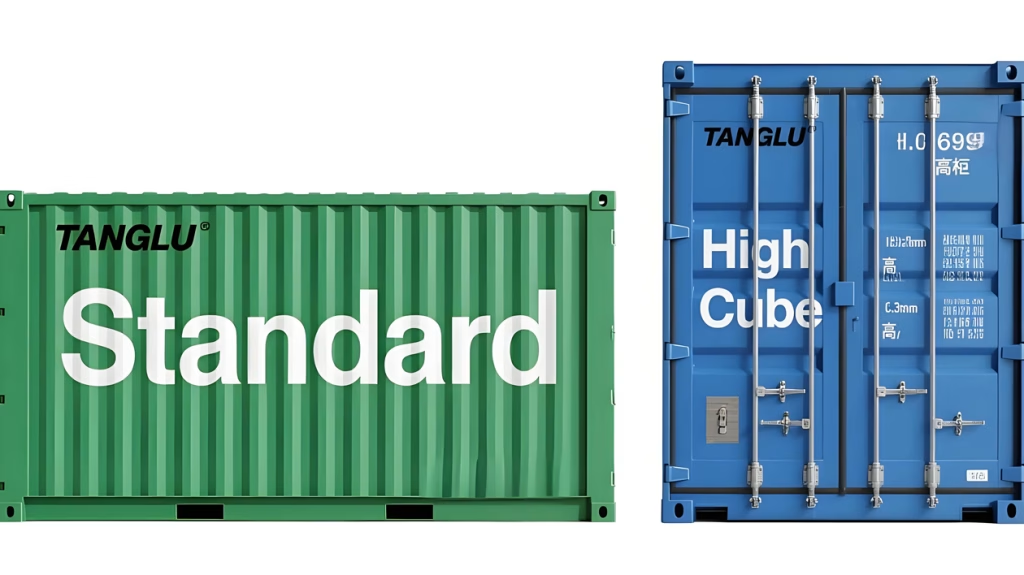
SHIPPING CONTAINER SIZE CHART
Below is a comprehensive table that details the dimensions and specifications for standard sizes of shipping containers:
| Container Size | Exterior Dimensions (L x W x H) | Interior Dimensions (L x W x H) | Square Footage | Cubic Feet | Tare Weight | Gross Weight | Door Openings (W x H) |
|---|---|---|---|---|---|---|---|
| 10 ft | 10′ x 8′ x 8’6″ | 9’3″ x 7’8″ x 7’10” | 75 square feet | 560 cu. ft. | ~2,850 lbs | ~22,000 lbs | 7’8″ x 7’5″ |
| 20 ft | 20′ x 8′ x 8’6″ | 19’4″ x 7’8″ x 7’10” | 150 square feet | 1172 cu. ft. | ~4,850 lbs | ~67,200 lbs | 7’8″ x 7’5″ |
| 40 ft | 40′ x 8′ x 8’6″ | 39’5″ x 7’8″ x 7’10” | 300 square feet | 2350 cu. ft. | ~8,000 lbs | ~67,200 lbs | 7’8″ x 7’5″ |
| 40 ft High Cube | 40′ x 8′ x 9’6″ | 39’5″ x 7’8″ x 8’10” | 300 square feet | 2694 cu. ft. | ~8,600 lbs | ~67,200 lbs | 7’8″ x 8’5″ |